
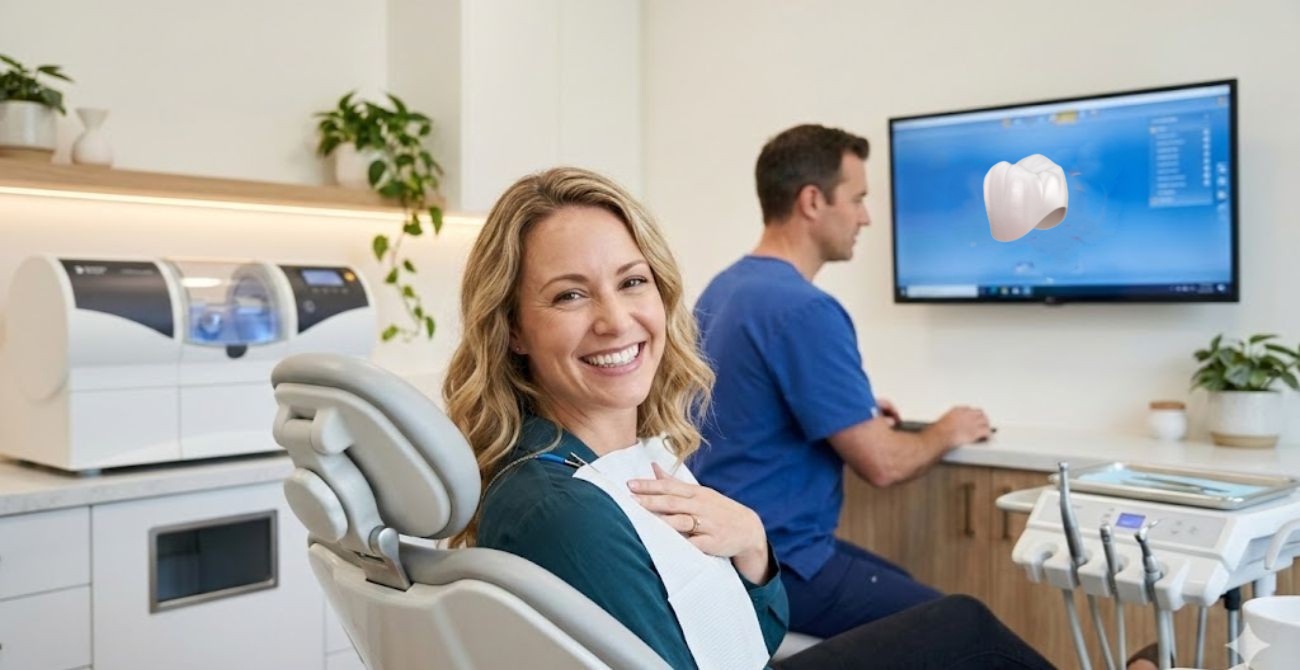
Life moves fast in The Woodlands, and dental care is no exception. For most people who drop kids off at schools between morning walks to The Woodlands Waterway or visit with friends on weekends at Market Street, the best solutions are those that save them time without sacrificing quality. When a tooth is damaged or weakened, patients frequently seek a dependable restoration that effectively restores function while accommodating busy lifestyles. To meet this demand, modern restorative dentistry has developed a range of treatment options.
Same-day crowns are a relatively new technology that enables dental professionals to plan and place single-visit dental crowns in only one appointment. Patients can now walk out with a crown in one visit, rather than waiting weeks for a lab-created restoration. This improvement protects injured teeth and helps patients get back to their normal work much more quickly.
Why Dental Crowns Are Used in Restorative Care
Dental crowns are protective caps placed over damaged teeth. It replaces strength, shape, and function while using materials that help the tooth blend well with surrounding teeth.
There are a few common situations where dental professionals will recommend a crown:
- A tooth compromised by significant decay
- A cracked or fractured tooth
- A tooth that has already undergone root canal treatment
- Severe wear from grinding
A tooth receiving final treatment with a large filling and requiring additional support. Crowns are a crucial dental restoration that helps patients retain their natural teeth and maintain proper chewing function.
How Modern Technology Allows Faster Treatment
Conventional crowns usually take several appointments. During the first appointment, the tooth is prepared, and impressions are sent to a lab while a temporary crown is placed until the final restoration is made.
This process has been modified in light of advanced restorative dentistry. Dentists can design and fabricate a same-day dental crown in The Woodlands at the clinic using digital scanners and in-office milling systems.
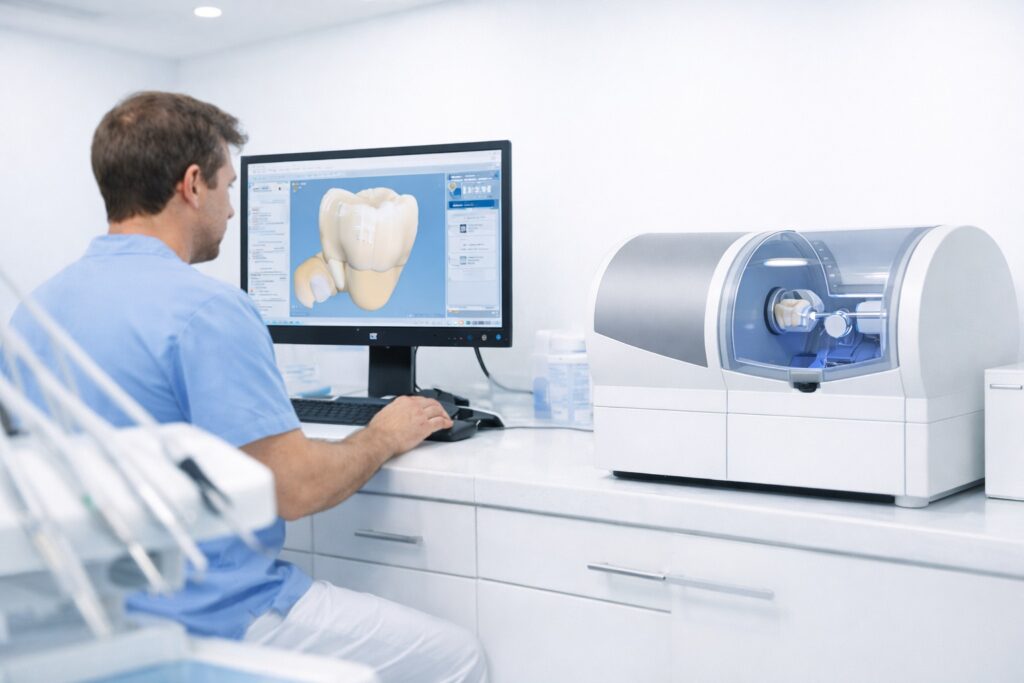
This process typically includes:
- The use of digital scanning of the tooth, in place of impressions that get messy
- Computer-aided design for exact shape and fit
- The crown is prepared in the office from a strong porcelain material.
- Installing the permanent crown on the same visit
- For many patients, these systems have made single-visit dental crowns possible.
Benefits of One-Visit Completion of the Procedure
For most people, the biggest perk is ease. But the advantages go well beyond time-saving.
- Fewer Appointments: Getting a traditional crown typically requires two or more visits to the dentist. Having it all done in one visit also helps alleviate scheduling headaches, particularly for individuals who juggle work, school, and family obligations.
- No Temporary Crown: Temporary crowns can loosen or become more sensitive. A crown fitted in a single visit requires no temporary restoration.
- Digital Precision: Digital scanning technology that allows for accurate measurements of the tooth. It enables a more closely tailored, and therefore comfortable fit.
- Faster Tooth Protection: If left unprotected, a damaged tooth might worsen. Delivering the final restoration up front helps restore function faster.
- Comfortable Digital Impressions: Digital scanning is a favorite among many patients over the older-style impression trays. The treatment is faster and usually more enjoyable.
- Strong Ceramic Materials: Today, crowns can be crafted from modern ceramic materials that are stronger than the original tooth and resemble its appearance.
Why Convenience Matters for Busy Professionals
Life in The Woodlands community tends to center around outdoor recreation and family life. From biking the Spring Creek Greenway to attending events at The Cynthia Woods Mitchell Pavilion, dental pain can cut plans short.
Scheduling multiple dental appointments can also be difficult for families balancing school events, work hours, and weekend activities. A single-visit procedure allows patients to reduce interruptions to their regular schedule while addressing a significant oral health issue.
The ability to restore a damaged tooth in one appointment, rather than requiring multiple sessions as with other restorative methods, makes treatment much easier for many people.
What Happens During the Appointment?
Despite being fast, the procedure is still meticulous, with steps taken to ensure the tooth is protected.
The appointment usually involves the following series of steps related to the process:
- Initial Evaluation: The dentist looks at the tooth and agrees that a crown is the solution.
- Preparing the Tooth: A small amount of enamel is removed to ensure the crown fits properly.
- Digital Scanning: The scanner takes detailed photographs of the tooth and the surrounding area.
- Computer-aided Design: Software generates a crown customized to fit the patient’s bite and tooth shape.
- Milling the Crown: An in-office milling machine shapes a ceramic block into the final restoration.
- Placement and Adjustment: The crown is also adjusted for proper bite alignment and bonded to the tooth. It allows patients to leave the appointment with a restored tooth.
Long-Term Oral Health Benefits of Same-Day Crowns
Crowns have more value than cosmetic purposes alone. They also promote long-term oral health.
A well-placed crown helps:
- Prevent further weakening of compromised teeth
- Restore chewing ability
- Maintain proper bite alignment
- Prevent cracks from spreading
- Preserve natural tooth structure
Crowns help reduce the risk of future problems by reinforcing a compromised tooth.
When is a Crown Recommended?
While the only person who can determine the proper treatment is a dental professional, there are certain symptoms to look out for that may indicate the need for a crown:
- Persistent tooth sensitivity
- Visible cracks or fractures
- Fillings that are large enough to make the tooth weak
- Pain while chewing
- Teeth worn down by grinding
And getting evaluated early will reduce the risk that a minor issue becomes a major problem.
Encouraging Strong, Healthy Smiles
Owing to ongoing advancements in dentistry, restorative procedures have become increasingly effective and comfortable. Digital technology and advances in ceramic materials have transformed the design and placement of crowns.
This allows dental professionals to deliver restorations that effectively protect natural teeth while minimizing disruption to everyday life. For many patients, this gives a pragmatic solution when an impacted or badly damaged tooth needs attention.
A Modern Approach to Restoring Your Smile
Dental care should fit into your life without causing excessive delays. Treatments that rapidly restore function are doing so in a way that allows patients to resume their daily activities more comfortably. Comprehensive restorative care provided by Victory Smiles Dental Center is designed to protect teeth and health in the long term.
If a damaged tooth has been affecting your comfort or ability to chew, call us to schedule an appointment. This will help you determine whether a crown is the appropriate course of action. Early treatment of dental concerns leads to better outcomes and healthier teeth in the long term.
Questions People Ask About Dental Crowns
1. How long does the crown procedure usually take?
A single appointment typically lasts between 1 and 2 hours, depending on the condition of the tooth. During the visit, the tooth is prepared, digitally scanned, and a custom crown is created and placed, allowing patients to leave the office with their final restoration.
2. Are crowns placed in one visit durable?
Yes, modern crowns created through digital technology are made from high-strength ceramic materials designed for durability. These restorations are crafted to withstand everyday chewing forces while maintaining a natural appearance that blends with surrounding teeth.
3. Can a crown protect a cracked tooth?
A crown covers the entire visible portion of the tooth, helping hold the structure together. This support can prevent small cracks from worsening while restoring the tooth’s strength and stability for everyday function.
4. Is the procedure comfortable?
Dental professionals use techniques designed to keep patients comfortable during the process. Local anesthesia is typically used during tooth preparation, allowing the procedure to be completed with minimal discomfort.
5. How should I care for a crown after placement?
Caring for a crown is similar to caring for natural teeth. Brushing twice daily, flossing, and attending regular dental checkups help maintain the crown and surrounding teeth for long-term oral health.
6. When should someone consider getting a crown?
A crown may be recommended when a tooth becomes weakened, cracked, or heavily restored with a filling. Early evaluation helps determine the most appropriate treatment before the tooth becomes more severely damaged.